
The Familiar: A Behavioral Field Report on Cats and Human Magic
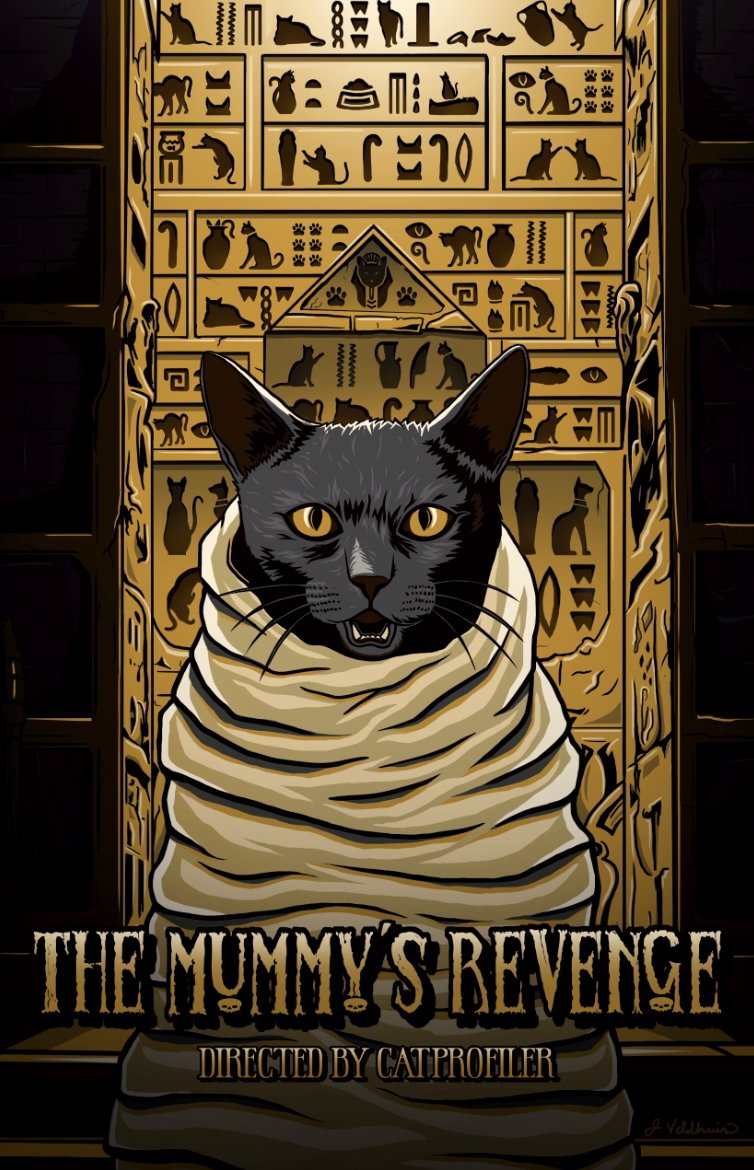
“The Mummy’s Revenge,” Directed by CatProfiler. Where divine worship meets behavioral science and the cats still win.
There’s a mummified cat in a museum case, staring out through the glass. This little one has seen it all, and she’s unimpressed. It smells of old linen and ancient dust, skin cells from people long gone. She’s behind glass, preserved, frozen in time. Aren’t you curious about her? What color was she? Did she meow? What did she think of her humans? People shuffle past with their lattes and strollers, completely missing the point: this is Exhibit A in the long history of humans getting control all wrong.
Witchcraft didn’t make cats magical. Cats did that all by themselves. People just couldn’t handle a creature that prowled the night, ignored every command, and only bothered to come home when it felt like it. That kind of independence? To humans, it looked like open rebellion. And when people see rebellion, they panic and start spinning stories to make it make sense.
Humans saw a cat pause before acting and called it sorcery.
So why the pause? A sensible cat is a cautious cat. Survival might weigh in the balance of every choice they make. It’s only wise to weigh possible risk vs. reward before you act. Magic? Please. She’s a strategist: Is this jump worth it? Will I get a snack, or will I get yelled at? She’s calculating success, failure, scolding, getting called a good girl, or perhaps a chance of treats. And all before you even blink! It’s not sorcery. It’s just a floof making choices faster than you can process.
When folks see their cat staring into a corner like they’ve seen a ghost, people start whispering about spirits. Reality check: she’s picking up on air currents and sounds you’ll never notice. Did you know that cats have super hearing? They can hear up to 64 kHz. That’s double what humans can. Your kitty probably isn’t seeing ghosts. (Or maybe she is, and she’s not saying.) But it’s more likely that she’s listening to a channel you don’t get.
If you’re crying and your cat shows up, she’s not channeling some mystical empathy. She’s worried about you, and she wants to help. She’s reading your tone, your posture, your breathing. This is Cat 101, and honestly, she’s better at reading you than most humans are.
Want to understand more about feline emotional manipulation? Read Why Cats Lie.
When your cat ignores you, she’s not possessed. (Like she’d allow that!) She’s doing the math: what’s in it for me? Yes, cats know their names. They just choose to answer about half the time. Honestly, that’s more than most roommates.
How the Symbol Took Shape
Medieval Europe was obsessed with control: the church over the laity, husband over wife, master over servant, and crown over everyone. Witch hunts were basically sermons about what happens when you break the rules. Cats, meanwhile, ignored every rule in the book. Attempting to control a cat is like trying to control the wind. They lived with people by choice, but they were completely self-sufficient. They stayed half-wild, hunting for themselves, coming and going when they pleased, and handing out affection on their own schedule. That kind of independence drove the control freaks nuts.
So when women got accused of stepping out of line, their cats got dragged into the mess. Suddenly, cats were “familiars”—walking, purring proof that a woman wasn’t following the script. If your cat came and went as she pleased, people assumed you did too. Behavioral note: People call female cats “aloof” and males “friendly,” even though the data says otherwise. Gender stereotypes don’t stop at humans.
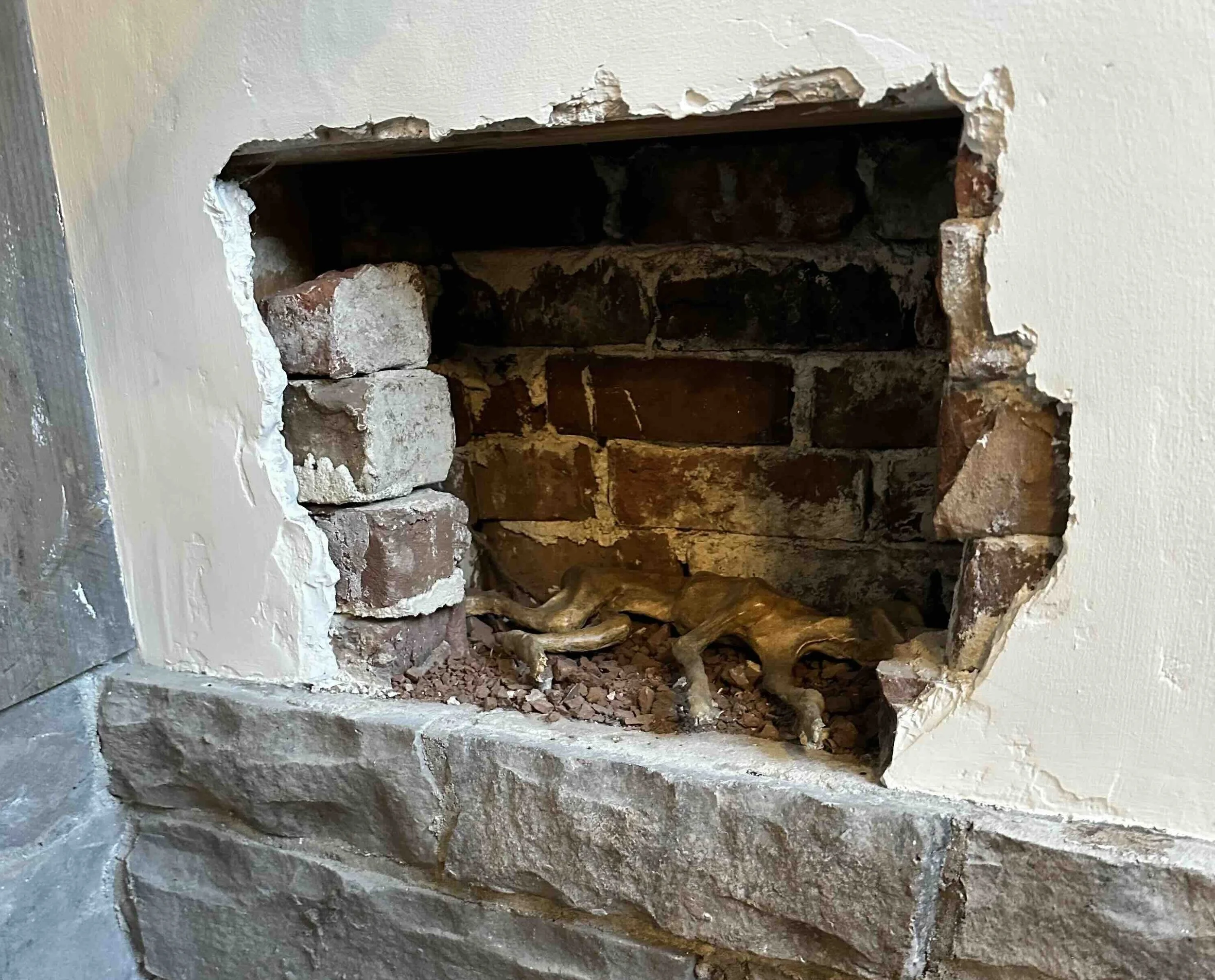
A concealed cat discovered inside a house wall — not a curse, but a centuries-old protection charm meant to guard the home. Photo by CatProfiler.
The Cats Inside the Walls
People saw cats as guardians because they wanted protection, not just out of superstition. Sealing cats in houses wasn’t about witchcraft. It was a form of home security, cat style. Starting in the fifteenth century, builders in Britain, Ireland, and Europe hid dead cats in walls and under floors, especially near doors. There were no curses, just a hope for lasting, cat-powered safety.
Why use a cat? Because cats already guarded the edges of homes for real. They patrolled, slept by doors, and marked their turf. People just copied what worked: if a live cat could protect the border, maybe a dead one could too. The cat became both a real and symbolic protector. Creepy? Absolutely. But in a weird way, it makes sense.
Can you imagine finding a mummified cat during a remodel? What’s wild is that a lot of people who’ve found those cats weren’t dealing with witchcraft or serial weirdness. It was usually intended as a kind of medieval home insurance. In old houses across Britain, they keep finding mummified cats behind chimneys, thresholds, and fireplaces, buried there on purpose as protection charms.
So yeah, the horror-movie part is real, but so is the anthropology. You’d be standing there, drywall dust in your hair, face-to-face with five hundred years of human anxiety, and a cat that, even in death, got stuck doing perimeter duty.
You can’t talk about cats and magic without Egypt showing up.
But the story’s not as mystical as people think. In the Late Period, temples bred animals—especially cats—for mass ritual mummification. Archaeologists have found entire cat necropolises: rows of wrapped bodies offered to the goddess Bastet.
But the real story is bigger than gods and rituals. Egypt set the template. The cat wasn’t just a pet; she stood for both protection and chaos. When that idea spread, it got remixed. Some people saw the cat as a blessing, others as a threat. That’s how cats ended up as guardians, omens, and familiars—the same animal, just with new stories tacked on.
Why Black Cats Took the Heat
Black cats didn’t bring bad luck; they just disappeared in candlelight.
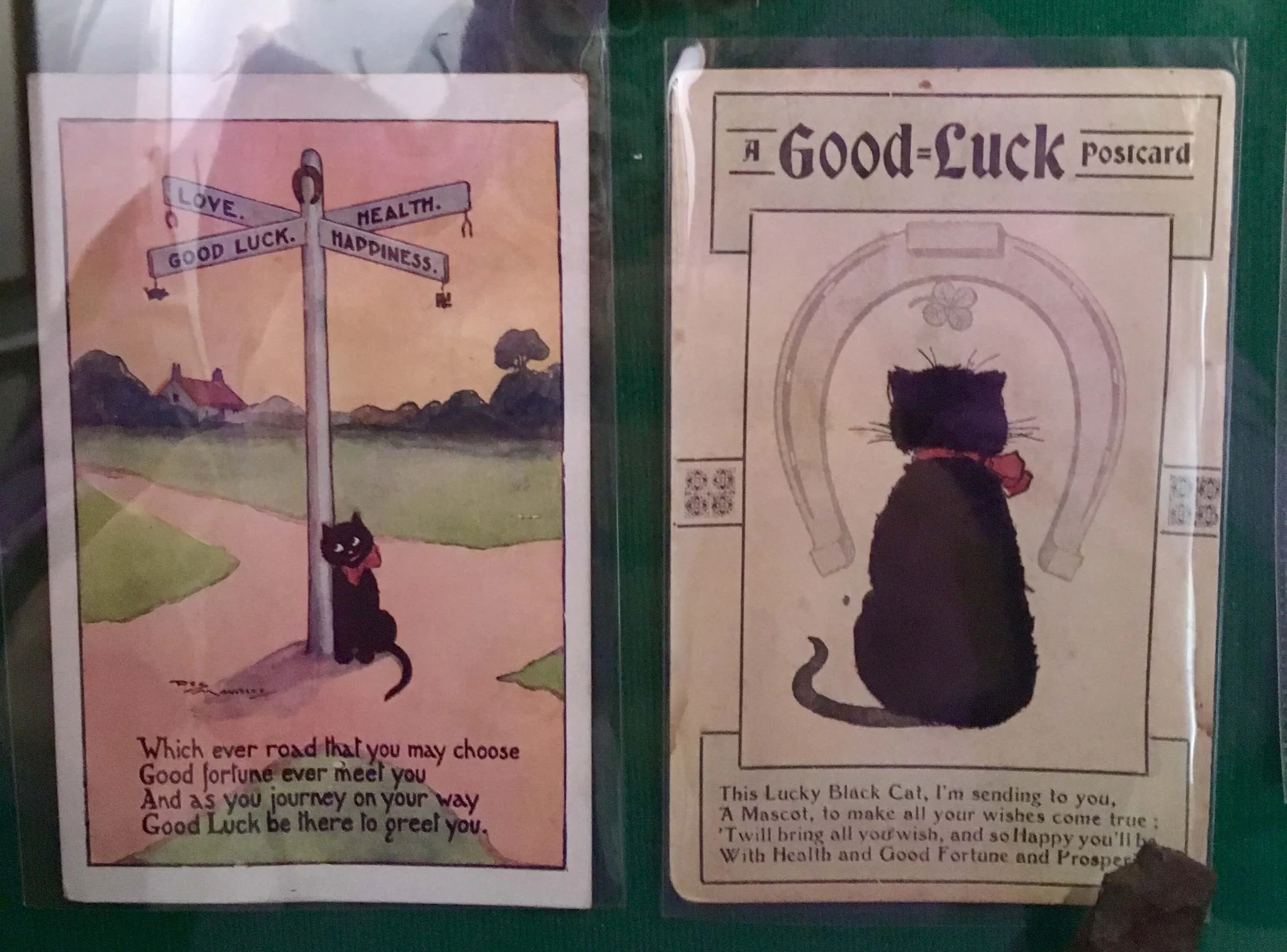
Early 20th-century postcards showing black cats as good-luck charms — a sharp reversal of their medieval reputation.
In a dark room, a black cat is nothing but two eyes and a weird noise. People freaked out and let their imaginations run wild. In cities already on edge from plague and fire, it didn’t take much to tip people into fear. Black fur became a warning sign, all because people mixed up not seeing with being scared.
(Behavioral note: low-contrast environments trigger heightened threat assessment; the black-cat myth grew out of poor lighting and pattern recognition.)
What a Familiar Really Is
Strip away the magic, and a familiar is just a business partner in a fur coat.
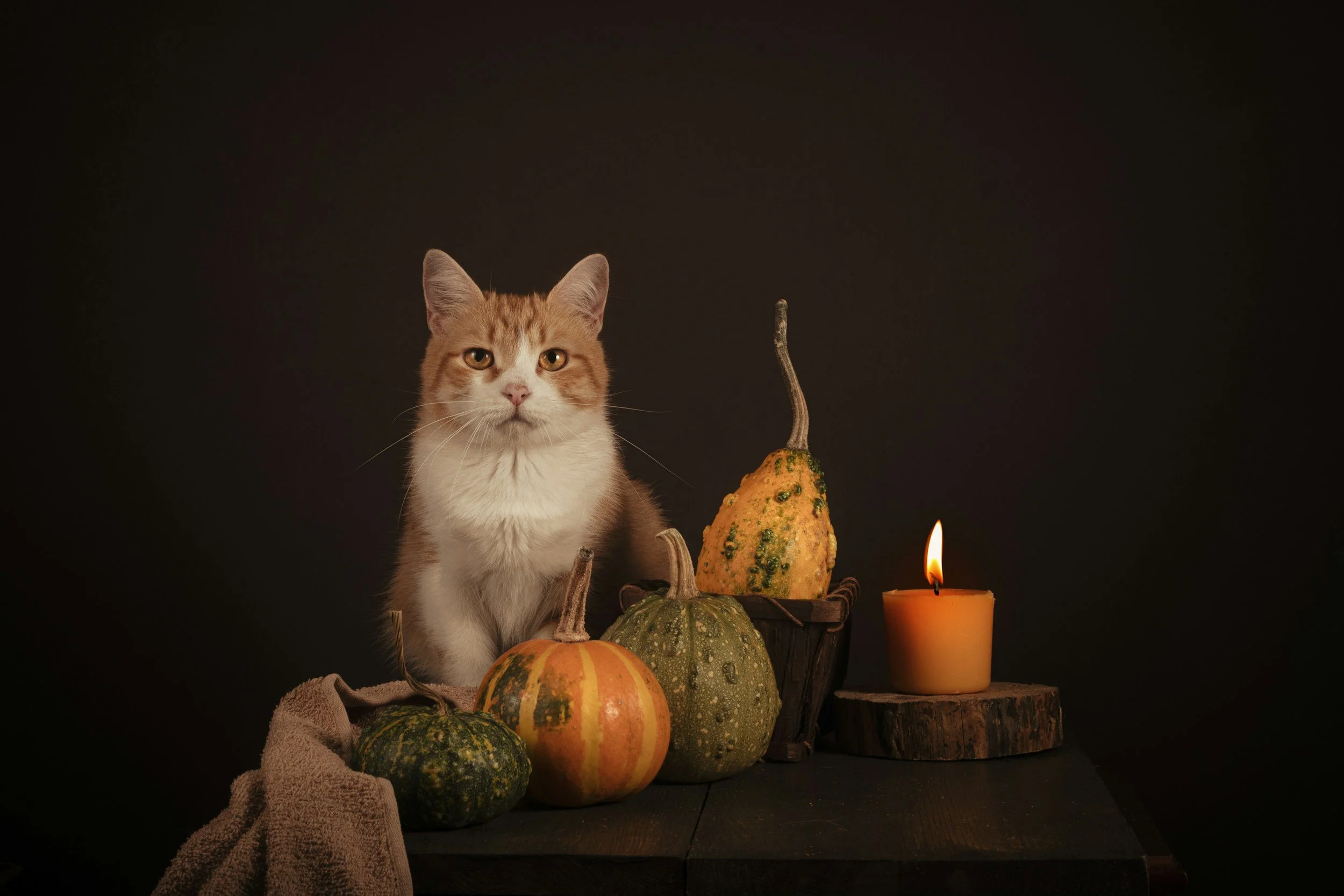
A modern familiar. The magic was never in the spell, it was in the partnership.
The cat handles pest control, offers emotional support, and runs the household her way. You provide food, shelter, and warmth. That’s the deal. A simple contract: cats handle pests, emotional stability, and patrol; humans provide food, warmth, and space. Both sides know the terms.
To outsiders, it looked mystical because people love turning what they can’t control into a mystery. The truth? It’s just cooperation with clear boundaries. No magic required.
(Behavioral note: cats co-evolved with humans through commensal domestication—they moved in for rodent hunting, stayed for steady resources, and built social tolerance afterward. No one trained them to do it.)
From Fear to Reclamation
Modern witchcraft finally flipped the script. People stopped trying to make cats act like dogs. They figured out that with cats, contact is by invitation only, and silence actually means something. The black cat turned into a symbol of independence. Translation: the cat decides when and how to spend time with you. Setting boundaries and recovering from burnout? A cat’s nap or sudden vanishing act became a badge of honor. What hustle culture calls lazy, younger generations call self-care. Online, cats are the poster child for controlled indifference, not fake positivity.
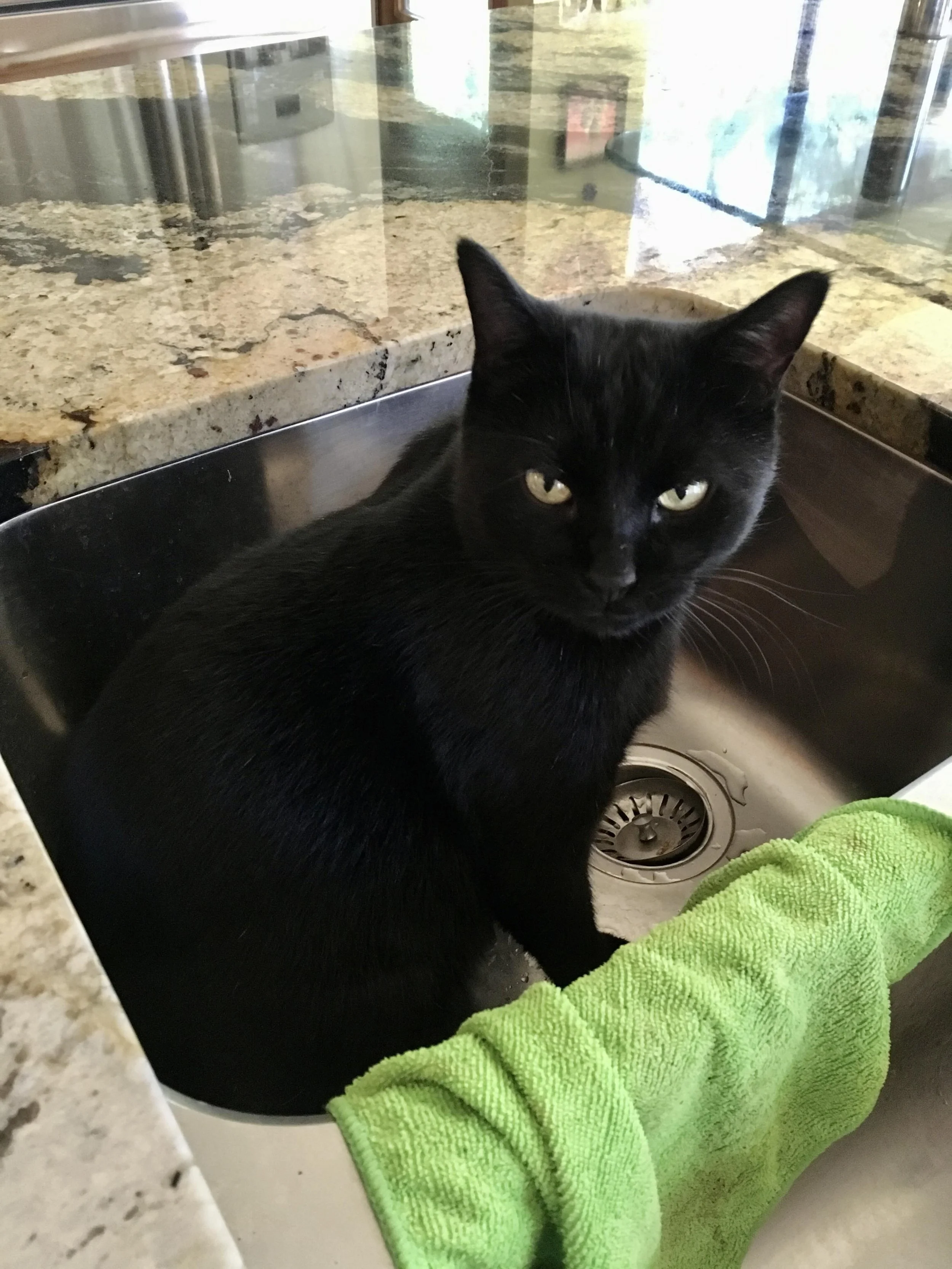
The modern familiar helping in the kitchen: unmoved, unbothered, and entirely in charge.
The message: affection and energy are limited, and you get to choose where to spend them.
(Behavioral note: cats conserve energy to maintain performance; rest is a survival strategy, not laziness.)
This isn’t just a vibe shift. Science backs it up. When cats get respect and a predictable routine, they get more secure—and more affectionate. Every modern witch who lets her cat come and go is actually nailing cat psychology, even if she has no idea.
Behavior Explains the Myth Without Killing It
It’s easy to laugh at old fears, but it’s smarter to translate them. Instead of calling villagers irrational, see them as people trying to make sense of a complicated world. When someone thought a cat saw demons, they were just noticing real behavior they couldn’t explain. The builder who hid a cat in a wall was protecting his home the only way he knew how. Even the magistrate accusing a woman of witchcraft was, in his own way, admitting there’s a real connection between people and animals. He just hated being left out.
Everyday “Witch” Behavior, Decoded
People still love to call normal cat behavior supernatural. You can set the record straight without ruining the fun. Try this: watch your own cat tonight, especially when she’s on door patrol. Notice how she reacts to a draft or the tiniest sound, and see all the non-magical cues she’s picking up. It’s the fastest way to turn theory into real life.
The unblinking stare: vigilance, not a curse. Cats blink less when tracking movement or guarding a resource.
The midnight sprint: cats are crepuscular, meaning they’re most active at dawn and dusk. Modern routines often push that energy into the night.
The obsession with certain books, altars, or laptops: those spots are warm, elevated, and smell like you. It’s territory selection, not spellwork.
The door sentry during storms: doors let in air and noise. The cat is picking up on the wind and vibrations. It’s weather science, just with fur.
All these behaviors seemed spooky because people just didn’t have the language for what was actually happening.
Behavioral note: pattern-matching under uncertainty is the root of most superstition; it’s how the brain fills gaps in sensory data.
The Buried Cat as the Bridge
Here’s the thread that ties it all together: the living cat guards the threshold, acting as both a real and symbolic guardian between worlds, superstitions, and every era of human imagination.
The living cat guards the threshold.
The dead cat becomes the permanent guardian in the wall.
The cat beside the witch becomes a spirit partner.
In every case, the cat’s job doesn’t change. She stands between worlds: inside and outside, safety and chaos, the known and the unknown. The human story shifts, but the cat’s behavior remains rock-solid.
Behavioral note: cats choose resting spots that allow full visual coverage of entry points. It’s environmental monitoring, not mysticism.
Reading the Witch Cat Without Fear
If your cat joins you during a ritual or meditation, she’s not blessing your work. She’s there because the room is finally calm, the temperature is right, and you’re acting like a normal human for once. That’s what she likes. If she avoids you, she’s giving feedback: maybe you’re too loud, something smells weird, or the vibe is off. Either way, she’s letting you know exactly how she feels. Your cat isn’t blessing your work; she’s just giving you a status update.
Where Science Meets Myth
Science doesn’t kill the magic. It just explains why the myth was there in the first place. Before microscopes, people used stories to describe the power they could feel but couldn’t measure. Behavioral research gives language to those stories. It lets you keep the wonder while dropping the fear.
The familiar isn’t a servant; she’s more like a neighbor. The relationship works because both sides keep their independence and their agency.
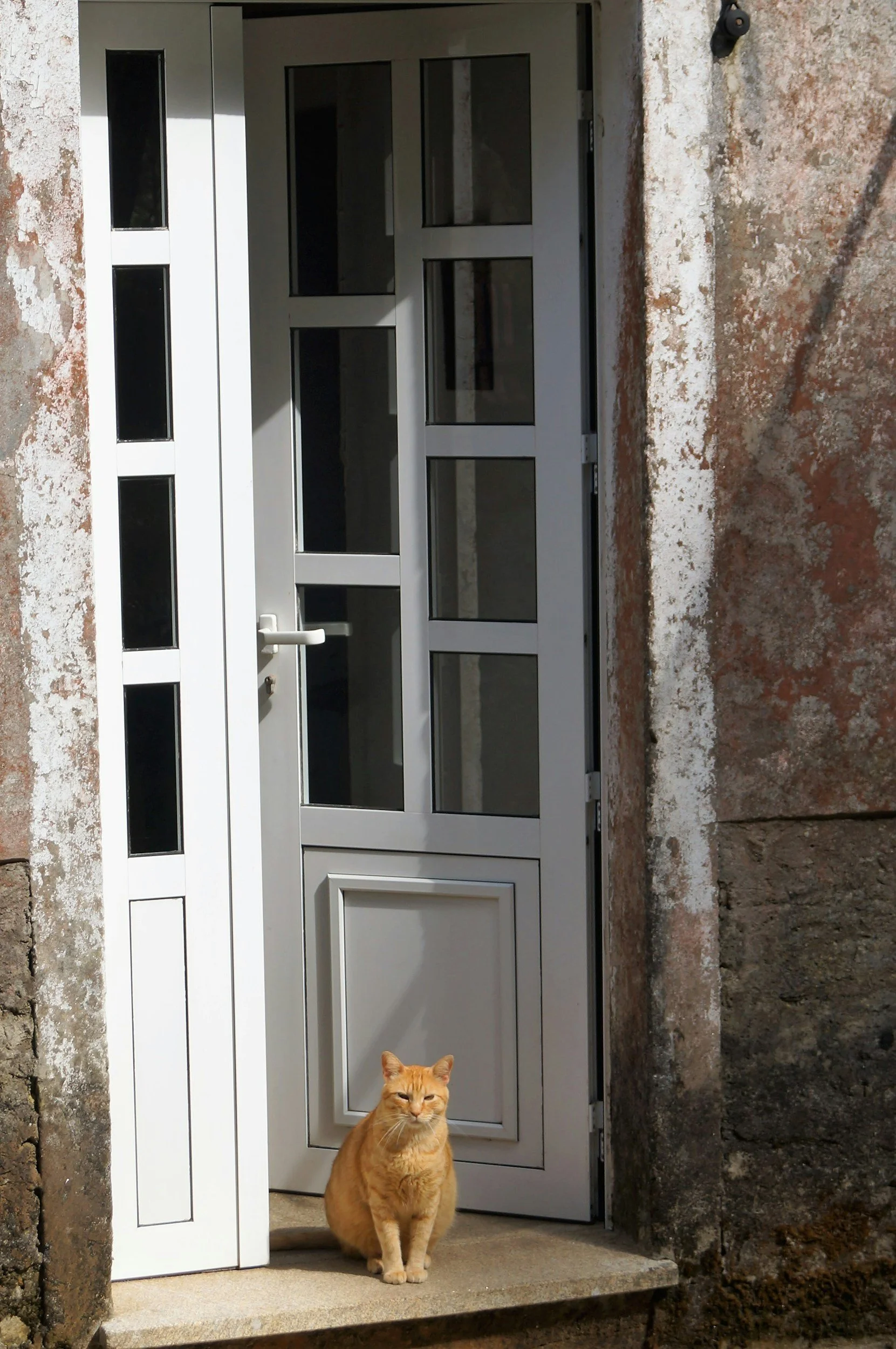
At the threshold, where cats have always lived: between worlds, but never choosing to belong completely to either one.
“Dear Human,
I couldn’t care less about your aesthetic. I care about temperature, routine, and whether you know how to respect my space.
If I pick your altar or your laptop, protect what I like about it: steady hands, calm energy, and a routine that doesn’t punish me for taking a break. The less you chase me, the more I’ll show up.”
Cats stayed in our stories about magic because they never gave that up. People noticed. Some tried to punish it, others tried to control it. The cat just kept being herself. That’s the real secret.
When we swap fear for understanding, we find the magic was never lost.
Think your cat’s possessed? She’s probably just smarter than you think.
Get real feline psychology straight from CatProfiler — no crystals required.
— CatProfiler
Feline behavior consultant and investigator.
Helping humans understand cats (and themselves) since forever.